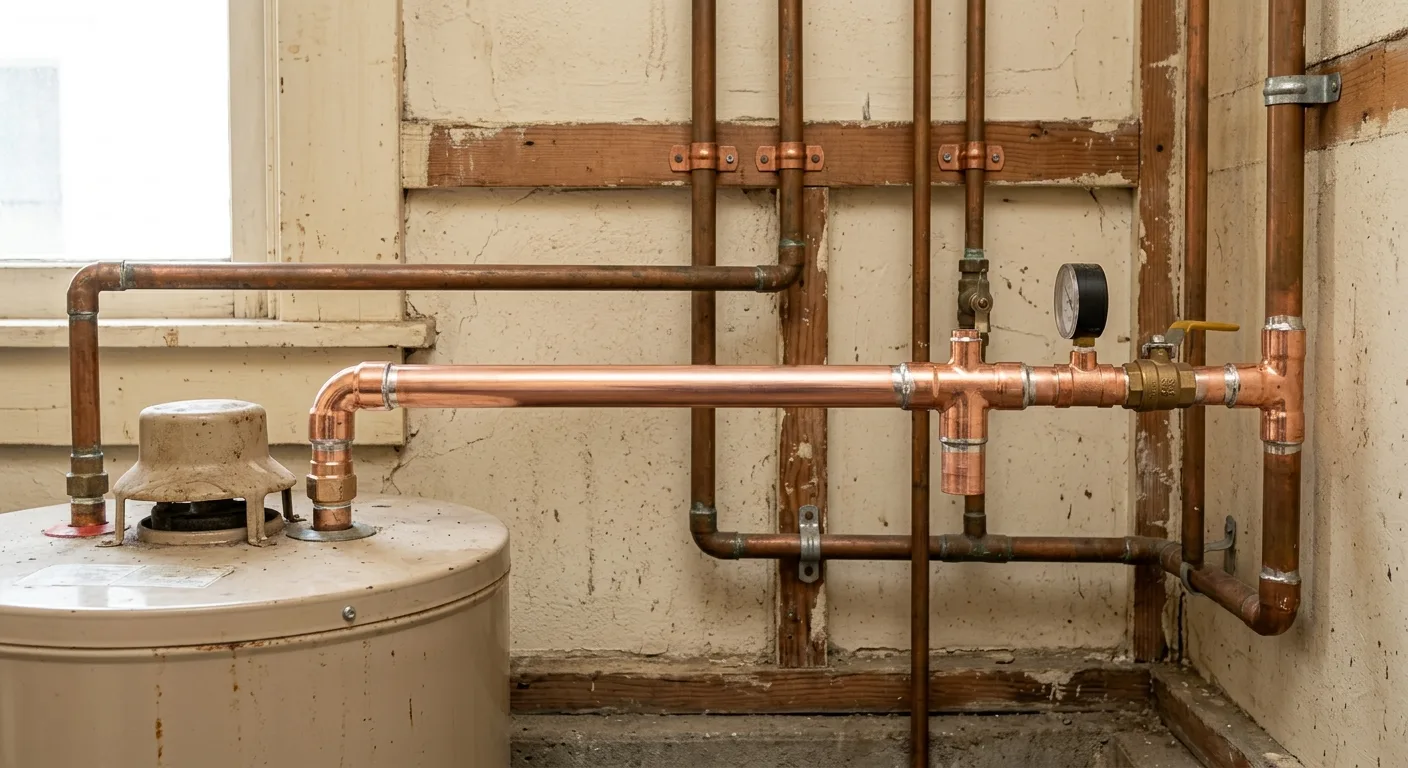
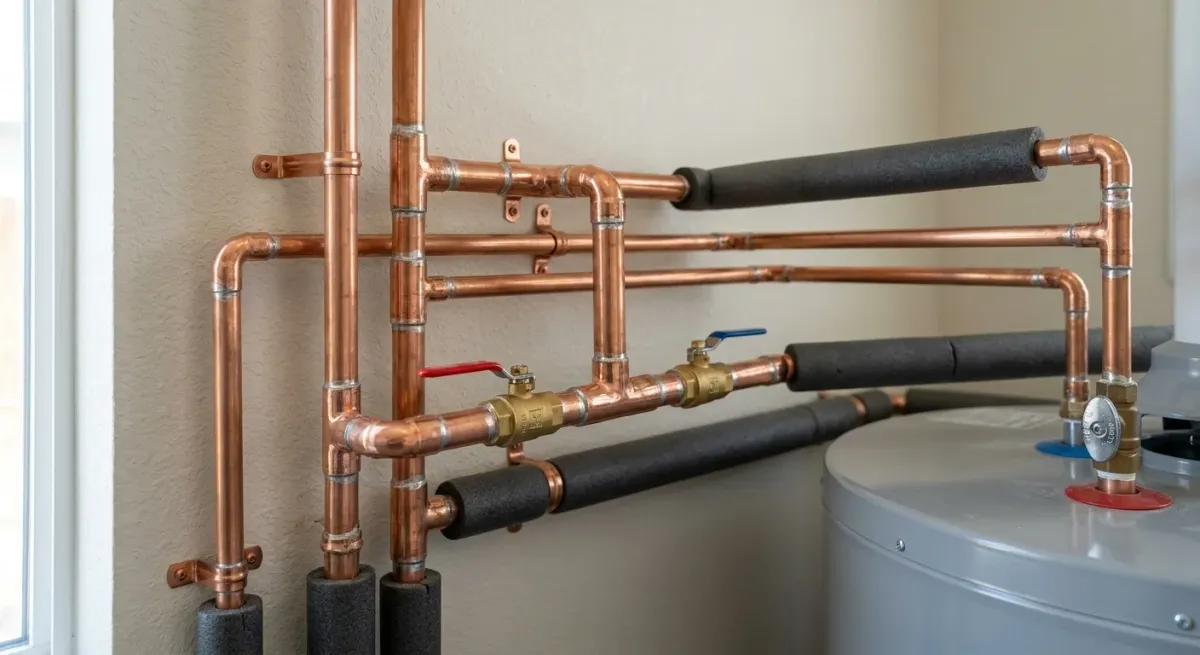
Copper has been the standard for residential water supply lines for decades, and for good reason: it's durable, it resists bacteria, and it handles pressure well. But it's not immune to corrosion. Pinhole leaks in copper most commonly trace back to one of three causes. First, aggressive water chemistry. Water that runs acidic, or that carries elevated levels of chlorine or dissolved oxygen, attacks copper from the inside, creating pits that eventually breach the pipe wall. Second, galvanic corrosion where copper meets dissimilar metal without a proper dielectric union. Third, high water velocity pushing turbulence through undersized fittings, which erodes the interior over time. Homes built between the 1960s and 1990s tend to see this problem most often, simply because those pipes have had the most exposure. If you're seeing one pinhole, there's a reasonable chance more are forming nearby. Our leak detection process identifies active leaks and stress points in the surrounding line before we close up the wall.