
Family-owned · Sacramento Local
Polybutylene Pipes & Whole-Home Re-Piping
Certified Plumbing & Drain replaces failing galvanized, polybutylene, and corroded pipe systems throughout the greater Sacramento region.
Free estimate
Tell us what you need
Three fields. It reaches a person here, not a call centre.
Galvanized and Polybutylene Pipes Don't Age Gracefully
Whole-home re-piping is one of the highest-stakes jobs we perform, and Certified Plumbing & Drain has handled it on residential and commercial properties across the greater Sacramento area for 13 years. If your home still has galvanized steel, polybutylene pipes, or aging copper showing signs of active corrosion, replacement isn't a question of if. It's a question of how much damage you'll tolerate before you call. We've seen the full range: pinhole leaks behind drywall, collapsed galvanized lines with nothing but rust sediment where the bore used to be, and polybutylene fittings that failed without any visible warning. The structural integrity of your plumbing system determines the structural integrity of the home around it. Call (916) 706-7460 and we'll assess the system honestly, not upsell you past what the job actually requires.
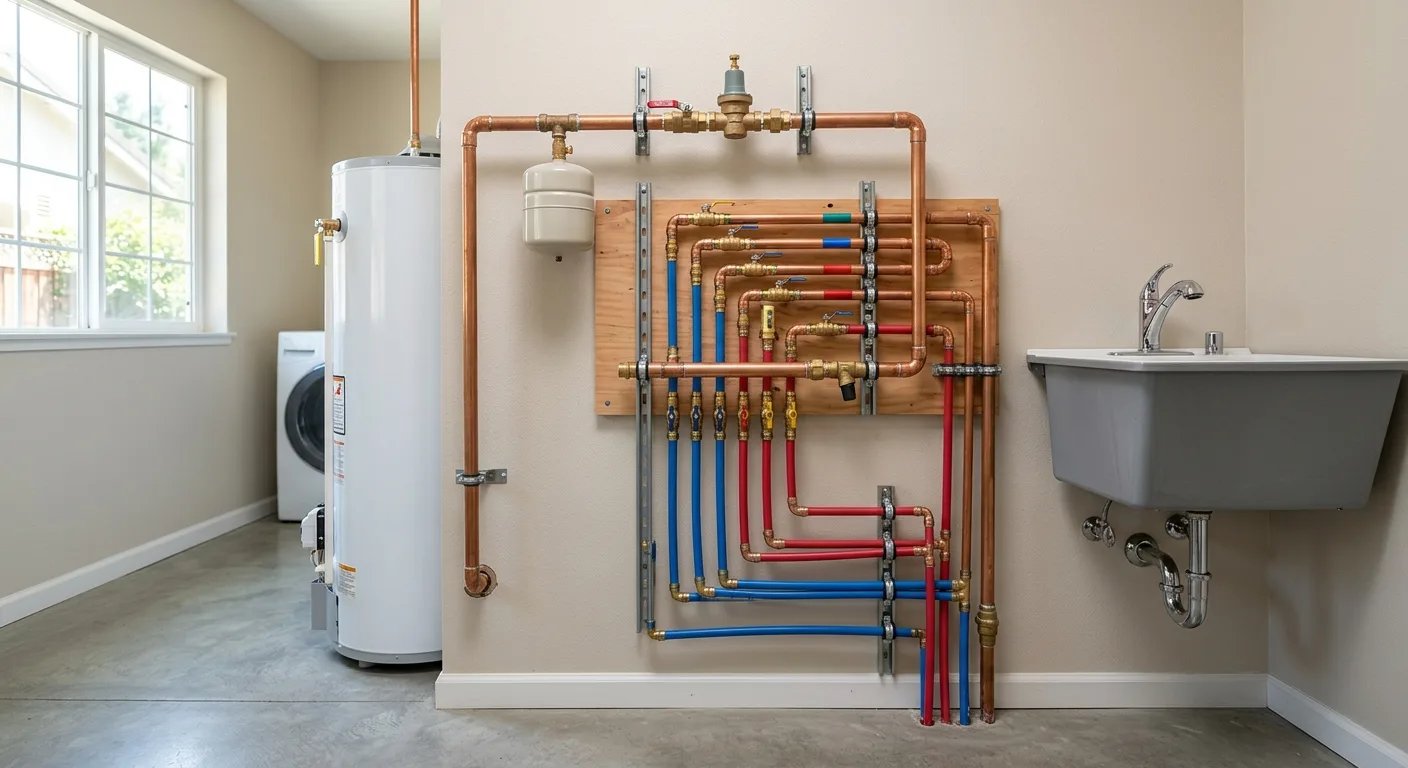
Re-piping scope varies considerably by home age, pipe material, accessibility, and how far the deterioration has progressed. A targeted partial re-pipe on a single corroded line is a very different job from a full-system replacement on a 1,960s-era house with original galvanized throughout. We work with copper and PEX as replacement materials, each with distinct performance characteristics, copper for its longevity and rigidity, PEX for its flexibility in tight access runs and its resistance to scale buildup. Access points, wall finishes, the number of fixtures served, and whether the sewer line services connected to the system are also in need of attention all affect the final scope. Every job is different, contact Certified Plumbing & Drain for an accurate estimate.
What Failing Pipes Actually Look Like Failing
The warning signs are specific. Most homeowners see them for months before they act.
Discolored Water at the Tap
Orange or brown water running from faucets is iron oxide, rust, breaking loose from the interior of corroded galvanized pipe. It's not a filtration problem. It's the pipe wall telling you it's nearly spent.
Reduced Flow Pressure
Galvanized pipe corrodes from the inside out. As mineral deposits accumulate on the interior wall, the effective bore narrows. When multiple fixtures run simultaneously and pressure drops noticeably, the pipe isn't undersized. It's clogged with scale.
Recurring Pinhole Leaks
One pinhole leak repaired and done is a repair. Two pinholes in the same line within a year is a system telling you the pipe wall is compromised along its full length. Patching individual spots on corroded galvanized is a temporary measure.
Polybutylene Fittings Still In Place
Polybutylene pipe was installed widely from the late 1970s through the mid-1990s. The material degrades on contact with oxidants in municipal water. If the plastic fittings in your system are grey or blue-grey polybutylene, the material is past its reliable service life regardless of whether it's leaked yet.
Visible Corrosion at Exposed Lines
Green or white mineral crust at copper joints, flaking at galvanized fittings, and soft spots in visible pipe runs are all indicators of corrosion that extends beyond what you can see. The problem is always larger inside the wall than outside.
Unexplained Spikes in Water Bills
If your consumption hasn't changed but your water bill has, you likely have an active leak somewhere in the supply line. Our leak detection process can locate the source before we determine whether repair or full re-pipe is the right scope.
How We Work
The Re-Piping Process, Step by Step
A whole-home re-pipe is a significant undertaking. Here's how Certified Plumbing & Drain approaches it so there are no surprises.
- 01
System Assessment
We inspect the existing pipe material, trace the supply runs, identify access points, and determine whether a partial or full replacement is warranted. We'll tell you exactly what we find, including if a repair will actually solve it.
- 02
Material Selection and Installation
We specify copper or PEX based on your system's configuration, access constraints, and long-term performance requirements. New lines are run, connected to existing fixtures, and pressure-tested before any wall surfaces are closed.
- 03
Final Inspection and Restoration
Water is restored, pressure is verified at every fixture, and we confirm there are no active leaks at any connection point. We document the completed work and walk you through the new system before we leave the property.
Material Selection
Copper vs. PEX: Which Pipe Is Right for Your Home
What Drives the Cost of a Re-Pipe
- 01
Home Size and Fixture Count
More square footage and more fixtures mean more linear feet of pipe, more connection points, and more labor hours. A 1,200-square-foot home with two baths is a different job than a 2,800-square-foot property with three and a half.
- 02
Existing Pipe Material and Condition
Galvanized that has corroded into adjacent framing takes longer to remove cleanly than copper that's been maintained. Polybutylene systems with multiple failed fittings require more careful handling to prevent damage to surrounding drywall during removal.
- 03
Wall and Ceiling Access
Finished walls require controlled openings and restoration. Unfinished utility spaces, crawl spaces, and attic access routes reduce labor time considerably. We assess access routes during the initial walkthrough so you're not surprised by wall repair costs after the fact.
Our Promise
Why Homeowners Choose Certified Plumbing & Drain
Thirteen years. Upfront pricing. No subcontractors.
Call (916) 706-7460- 01
13 years in residential and commercial plumbing
Not a franchise. Not a call center dispatch. Jose and his crew show up and do the work themselves.
- 02
5-star average across 20 Google reviews
Verified by real customers, including multi-call clients who came back for larger jobs after the first experience.
- 03
Upfront pricing, no hidden fees
You know the scope and the number before we start. If something changes, we tell you before we proceed.
- 04
24/7 emergency availability
A failing pipe doesn't wait for business hours. Neither do we. Call [(916) 706-7460](tel:+19167067460) at any hour.
Re-Piping: Frequently Asked Questions
How do I know if my home has polybutylene pipes?
Can you re-pipe without tearing out all my walls?
How long does a whole-home re-pipe take?
Is galvanized pipe dangerous to leave in place?
What's the difference between a partial re-pipe and a full re-pipe?
How much does it cost to replace galvanized pipes in a house?
Areas We Service for Re-Piping
Certified Plumbing & Drain performs whole-home and partial re-piping jobs throughout the greater Sacramento region, including homes in older neighborhoods with original galvanized or polybutylene systems. If you're dealing with a failing mobile home plumbing system, we handle those re-pipes as well. The material and access constraints are different, but the approach is the same: honest assessment, correct scope, upfront pricing.
served
Corroded Pipes Don't Repair Themselves
The longer a deteriorating system runs, the more damage it does to the structure around it. If you're seeing rust-colored water, pressure loss, or recurring leaks, call Certified Plumbing & Drain and get a straight answer about what the system actually needs.